



Area Rug Buying Guide: Sizes, Materials and Styles for Every Room
Area Rug Buying Guide: Sizes, Materials and Styles for Every Room
A great rug does more than cover the floor. It anchors a room, softens hard surfaces, and pulls scattered furniture into one coherent picture. Yet many shoppers buy a rug that ends up too small, too thin, or wrong for the room — which is why this area rug buying guide starts with the decisions that matter most.
Picking the right rug is not guesswork. Once you know how to measure, which materials suit which rooms, and how style and pattern work together, you can shop with confidence.
Area Rug Buying Guide: Start With Size
If there is one rule worth remembering, it is this: when in doubt, size up. A rug that floats in the middle of a room like a postage stamp makes the furniture look disconnected and the room feel unfinished. A properly sized rug gathers everything together and makes even a modest room feel intentional.
How to Measure Before You Shop
Grab a tape measure and a roll of painter’s tape. Outline the rug’s footprint on the floor and live with it for a day or two. Walk around it, open doors across it, and pull out a dining chair to see whether it stays on the rug. This simple test prevents most sizing mistakes, and it costs nothing.
Size Rules Room by Room
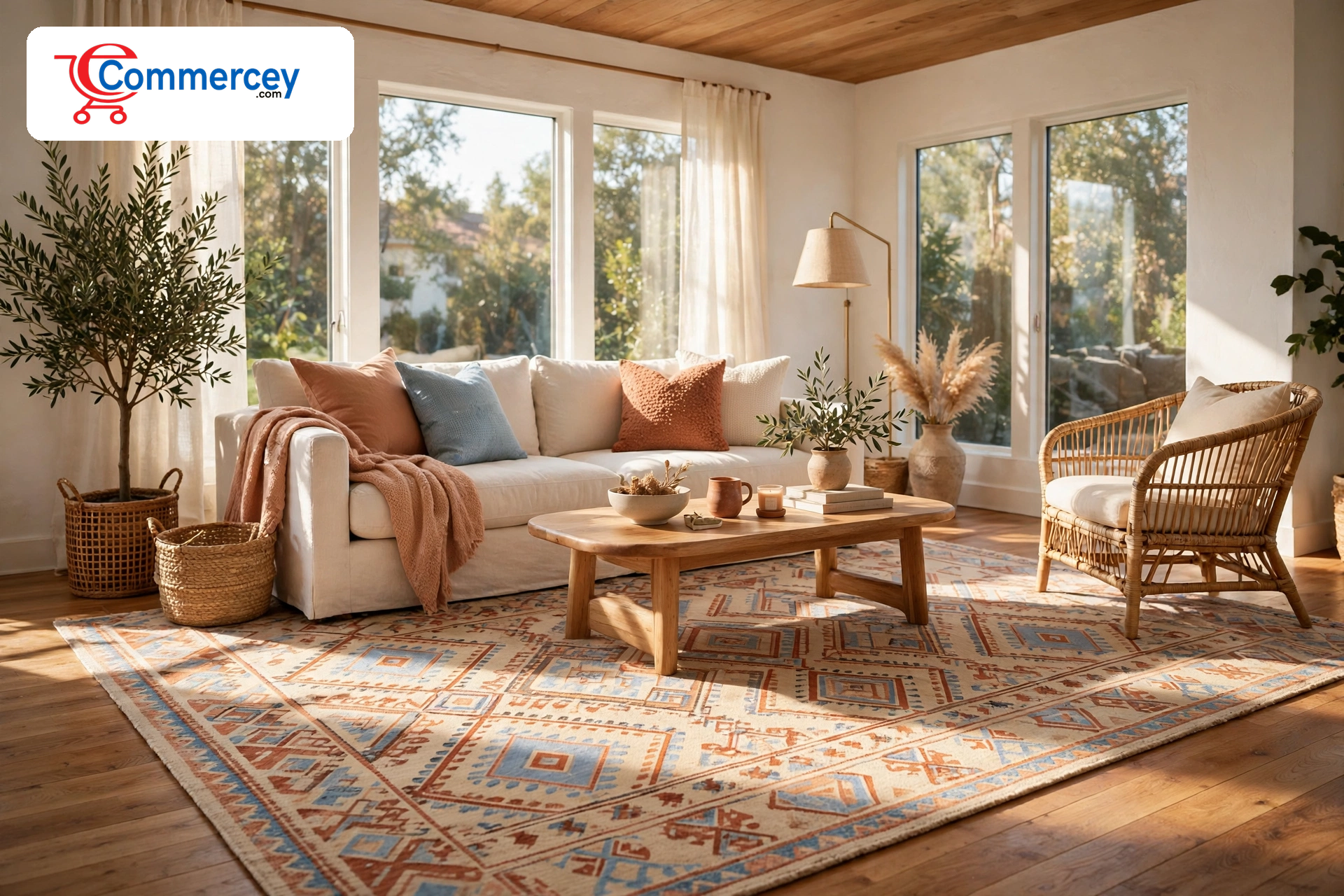
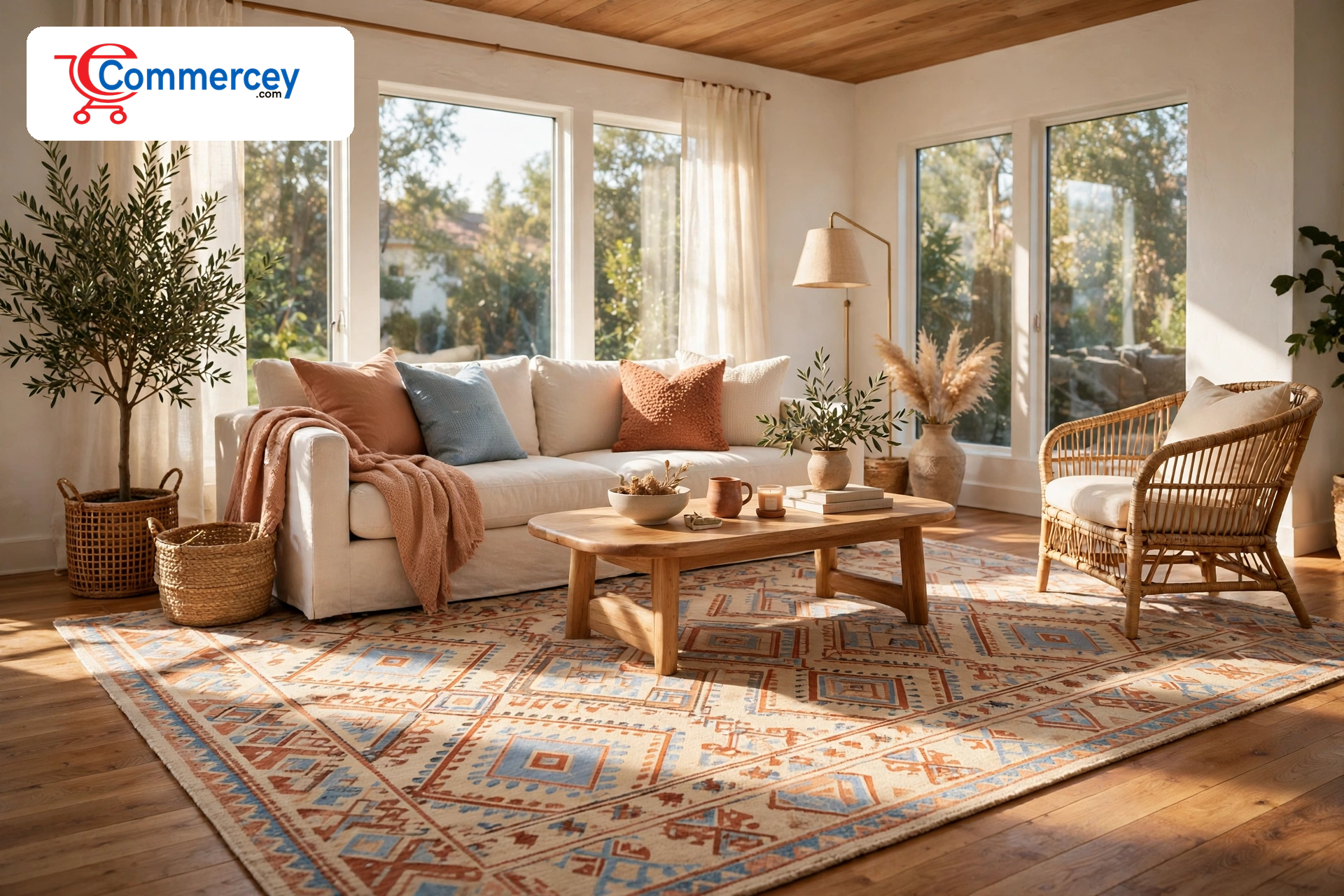
In the living room, the front legs of your sofa and chairs should sit on the rug. For a standard three-seater sofa, that usually means a rug at least 2.4 by 3 metres, and larger rooms often need 2.7 by 3.6 metres or more.
Under a dining table, the rug must extend at least 60 centimetres beyond the table on every side, so chairs stay on the rug even when pulled out. Measure the table with the chairs pulled out, not pushed in.
In the bedroom, a rug should extend at least 45 to 60 centimetres beyond the sides and foot of the bed. A large rug under the bottom two-thirds of the bed works well, or try two runners flanking the sides for a softer landing each morning.
Choose the Right Material for the Room
Material decides how a rug feels, how it wears, and how much care it needs. There is no single best material — only the best material for where the rug will live and who will walk on it.
Wool: Warm, Durable and Naturally Resilient
Wool is the classic choice for a reason. It is soft underfoot, naturally resists stains, and bounces back from foot traffic better than almost any other fibre. A wool rug in a living room or bedroom can last for decades with basic care. It costs more upfront, but for high-use rooms it is often the best value over time.
Cotton: Light, Washable and Casual
Cotton rugs are lightweight, affordable, and often machine washable, which makes them ideal for kitchens, kids’ rooms, and casual spaces. They are not as plush as wool and they show wear sooner in heavy-traffic areas, but for a room that needs frequent cleaning, cotton is hard to beat.
Natural Fibres: Jute, Sisal and Seagrass
Jute and sisal bring wonderful texture and an earthy, relaxed feel, making them favourites for entryways and sunrooms. They are tough and affordable, but rough under bare feet and they do not handle moisture well, so keep them out of bathrooms and damp basements. Many people layer a softer rug on top of a large jute base — the best of both worlds.
Synthetic Fibres: Practical and Budget-Friendly
Polypropylene and polyester rugs have come a long way. Modern synthetics resist stains, handle spills gracefully, and hold their colour in sunny rooms. They are a smart pick for dining rooms, playrooms, and homes with pets. They will not feel as luxurious as wool, but for busy family life they are often the most practical choice.
Match the Style to Your Room
A rug sets the tone of a room, so choose one that works with the furniture you already own rather than fighting it. If your sofa and chairs are solid colours, a patterned rug adds personality. If your furniture is already bold, a quiet, textured rug in a neutral tone lets everything else breathe.
Patterns That Work Hard
Geometric patterns suit modern and mid-century rooms, while traditional Persian-style motifs warm up classic and farmhouse interiors. Busy patterns are also wonderfully forgiving — they hide crumbs, pet hair, and the odd spill far better than a plain light rug ever will. If you have kids or pets, a pattern is not just a style choice; it is a survival strategy.
Colour: Anchor or Accent?
Decide whether the rug should be the star or the supporting act. A rug in a deep, rich colour can anchor a pale room and give it depth, while a neutral rug in cream, grey, or warm beige creates a calm base that lets you change cushions and artwork with the seasons. Pull one colour from the rug into your cushions or curtains, and the whole room will suddenly look designed rather than assembled.
When you are ready to browse, start with the dedicated area rugs collection to compare sizes, materials, and patterns side by side, then look at the wider home decor range for cushions, throws, and artwork that pick up the colours in your chosen rug.
Pile Height, Backing and the Details That Matter
Pile height — how tall the fibres stand — affects both comfort and practicality. A high pile feels plush and luxurious underfoot, perfect for bedrooms and cosy reading corners. A low pile is easier to clean, lets doors swing freely over it, and stands up better to dining chairs and rolling office chairs. For hallways and dining rooms, low pile is almost always the wiser choice.
Do not skip the rug pad. A good underlay stops the rug from slipping, adds cushioning, protects your floor, and can extend the rug’s life by years. It is a small extra cost that pays for itself many times over, especially on hard floors. Check the backing too: a rug on a hard floor needs a grippy backing or a pad, while one near an exterior door should resist moisture from wet shoes.
Styling Tricks That Make a Rug Look Expensive
Layering is the quickest way to make a rug look considered. Place a smaller patterned rug over a larger neutral base — jute underneath, wool or cotton on top — and you get depth and texture that a single rug cannot deliver. Keep the top rug at roughly two-thirds the size of the base so the layers read clearly.
Let the rug talk to the rest of the room. Echo its colours in a throw pillow or a piece of wall art, and the room gains a sense of rhythm. Pull the sofa and chairs slightly onto the rug, and leave that border of bare floor so the rug reads as a deliberate layer, not wall-to-wall carpet.
When you are furnishing around your new rug, the furniture collection is the natural next stop — from sofas and accent chairs that sit beautifully on a well-sized rug to coffee tables and storage pieces that complete the room.
Care and Cleaning: Keep It Looking New
A rug lasts longest when it is cared for from day one. Vacuum weekly, rotate the rug every six months so wear and sunlight fall evenly, and blot spills immediately — never rub, which pushes stains deeper into the fibres.
For a deep clean, check the label first. Many cotton and synthetic rugs can be washed or steam-cleaned at home, while wool and natural-fibre rugs usually need professional cleaning. A yearly professional clean keeps colours bright and fibres healthy, and it is far cheaper than replacing a rug you love. For stains, blot spills immediately — never rub, which pushes them deeper — and use cold water and mild soap for most food and drink marks.
Area Rug Buying Guide: Your Rug Shopping Checklist
Before you check out, run through this quick list. Have you measured with tape and lived with the outline for a day? Does the rug extend far enough under your furniture? Is the material right for the room’s traffic and moisture? Will the pile height work with doors and chairs? Have you ordered a rug pad? And does the colour or pattern connect with at least one other thing in the room?
If the answer to all of those is yes, you have found your rug. A thoughtful choice now means years of warm feet, quieter rooms, and a space that feels finished every time you walk in.
Related Resources
- Area Rugs — Area rugs in every size, material and style for living rooms, bedrooms and halls.
- Home Decor — Decor pieces, rugs, artwork and accents to finish any room.
- Furniture — Furniture for every room: seating, tables, storage, beds and more.