

Accent Chairs That Transform a Corner: How to Pick the Right One
Accent Chairs That Transform a Corner: How to Pick the Right One
Every living room has one: that empty corner by the window, the awkward stretch of wall beside the bookcase, the patch of floor that never quite earns its keep. The answer is usually simpler than we think. A single well-chosen accent chair can turn a dead corner into the most-used seat in the house, and this guide to accent chairs will help you pick one that fits your room, your habits, and your budget.
An accent chair is not just extra seating. It is the piece that gives a room its personality. Sofas do the heavy lifting, but they tend to be neutral by design. The accent chair is where colour, texture, and shape get to have fun. Choose it well, and the whole room looks finished.
Accent Chairs: What Makes Them Different
A regular armchair is built to blend in with a matching set. An accent chair is built to stand out. It is usually a single piece, bought on its own, chosen because its shape, fabric, or colour adds something the rest of the room does not already have. That is why accent chairs come in such a wide range: barrel chairs, wingbacks, slipper chairs, swivel chairs, tub chairs, and sculptural modern designs that look like art even when nobody is sitting in them.
Because they are bought singly, accent chairs are also the easiest way to experiment. You do not need to redecorate a whole room to change how it feels. One bold chair in velvet, leather, or a strong print can shift the mood of an entire space, and swapping one chair is far cheaper than replacing a sofa.
Start With the Corner, Not the Chair
Before you fall in love with a chair online, look at the spot where it will live. The corner decides almost everything: how big the chair can be, which direction it should face, and what job it needs to do. A chair beside a fireplace is a reading seat; one near the door is for putting on shoes. One angled toward the sofa joins the conversation; one facing the window is a quiet escape.
Measure Twice, Buy Once
Grab a tape measure and mark the chair’s footprint on the floor with painter’s tape. Leave at least 5 to 8 centimetres of breathing room around the chair so it does not look wedged in, and check that nearby doors, drawers, or curtains can open freely. If the chair swivels or reclines, mark out the full sweep of its movement, not just its resting size. A chair that looks perfect in a photo can feel enormous in a small corner, and returns are rarely free.
Height matters too. A chair with a high back fills a tall, empty corner beautifully, while a low, wide chair suits a room with low ceilings or a long, low sofa. As a rough guide, the chair’s back should sit within about 10 centimetres of your sofa’s back height, so the two pieces look like they belong together rather than competing.
Pick a Silhouette That Suits the Room
Silhouette is the shape of the chair, and it is the first thing your eye notices. A wingback feels traditional and cosy, with high sides that create a sense of shelter. A slipper chair, with no arms and a low profile, feels light and modern and slides easily into tight spots. A barrel chair wraps you in a gentle curve and works well in rooms that need softening. A swivel chair adds movement, which is genuinely useful in open-plan spaces where you want to turn between the television, the kitchen, and the view.
Think about who will sit in it and how. Deep seats with soft cushions invite long reads and afternoon naps. Firmer, more upright chairs suit conversation and short sits. If the chair is mainly decorative, comfort matters less, but a chair nobody wants to sit in is a waste of a good corner. When you browse the accent chairs collection, filter by shape first and colour second: the right shape in the wrong colour can be fixed with a cushion, but the wrong shape cannot be fixed at all.
Fabric and Fill: Comfort You Can Feel
Fabric decides how a chair looks, feels, and survives daily life. Velvet brings instant warmth and richness, and modern performance velvets resist stains far better than the delicate velvets of the past. Bouclé is the cosy favourite of the moment, though it needs gentle cleaning. Leather ages beautifully and wipes clean, which makes it a strong choice for homes with children or pets, while linen and cotton blends feel relaxed and casual but show marks more readily.
Fill is just as important. Foam holds its shape and gives firm, reliable support. Feather or fibre-filled cushions feel softer and more luxurious, but they need regular plumping. Many good chairs combine the two: a foam core wrapped in fibre for support with a soft sit. If you can, check the seat depth before buying. A depth of around 55 to 60 centimetres suits most adults for relaxed sitting, while shallower seats work better for upright, formal use.
Colour and Pattern: Make a Statement (or Don’t)
Here is where accent chairs earn their name. If your sofa is a neutral grey or cream, the chair is your chance to add colour. A deep green, mustard, terracotta, or navy chair can anchor a pale room and give it depth. If your room is already colourful, a chair in a quiet, textured neutral lets everything else breathe while still adding shape and interest.
Pattern follows the same logic. A bold print turns the chair into the room’s focal point, which is wonderful when the rest of the room is calm. In a busy room, a solid colour in an interesting texture, like ribbed velvet or woven bouclé, adds richness without adding noise. Whatever you choose, pull one colour from the chair into a cushion, a throw, or a piece of art elsewhere in the room, and the whole space will look designed rather than assembled. The wider living room furniture range is a good place to check how a chair’s colour sits next to sofas, tables, and storage in the same finish.
Style It Like You Mean It
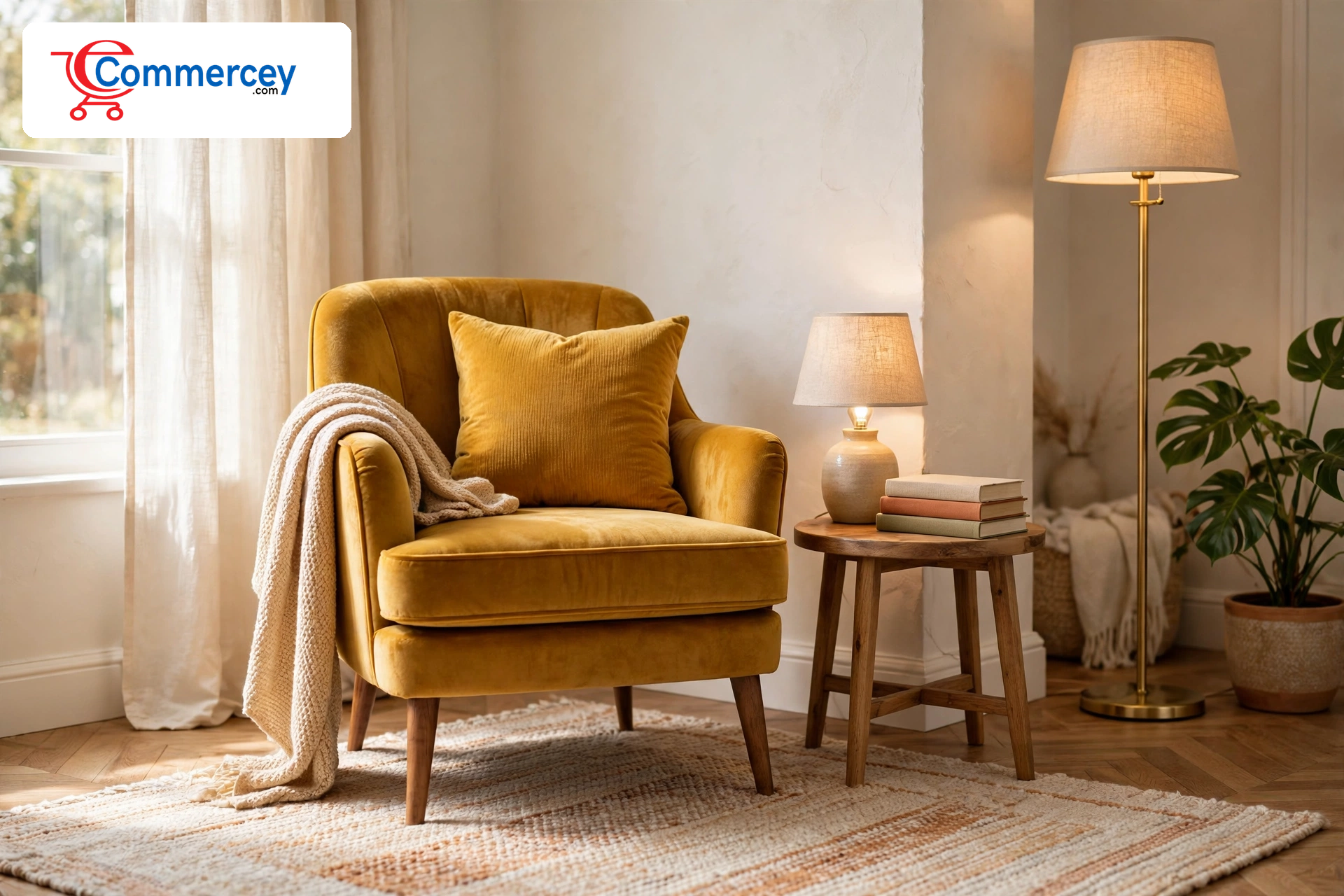
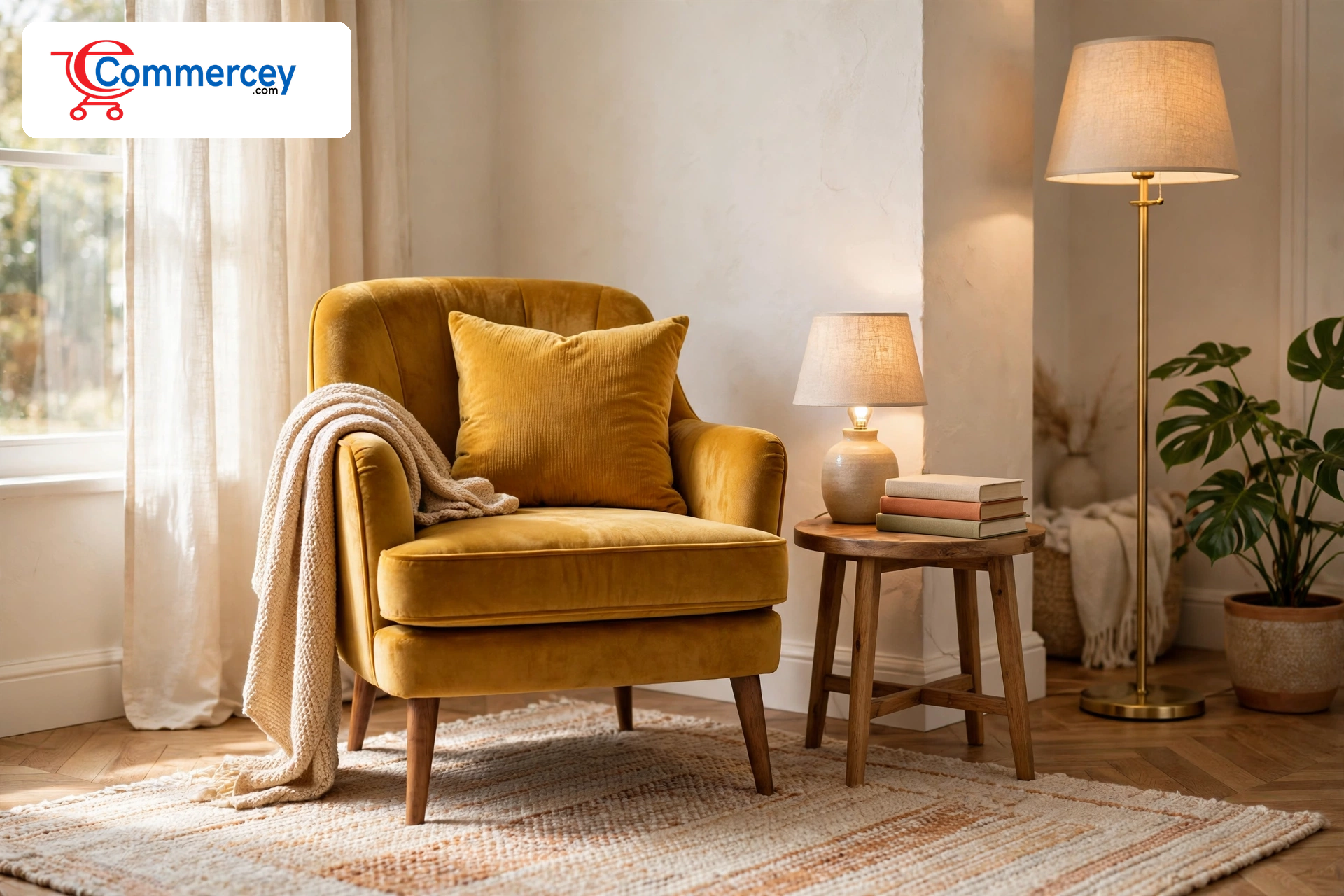
A chair on its own is furniture. A chair with a small side table, a lamp, and a throw is a destination. Place a side table within reach for a cup of tea or a book, add a lamp for evening reading, and drape a throw over one arm so the chair looks inviting even when empty. A cushion finishes the picture.
The finishing touches around the chair matter as much as the chair itself. A small rug under the chair defines the corner and stops it floating in the middle of the floor, while a plant or a framed print on the wall behind it gives the arrangement height. Browse the home decor collection for cushions, throws, lamps, and artwork that tie the corner into the rest of the room.
Common Mistakes to Avoid
The most common mistake is buying a chair that is too big for the corner. It is tempting to choose the grandest chair you can afford, but an oversized chair makes a small room feel cramped and makes everything else look out of scale. Measure first, and trust the tape more than the photograph.
The second mistake is ignoring the chair’s legs. Slim, tapered wooden legs make a chair look light and let you see the floor beneath it, which helps small rooms feel bigger. The third mistake is buying purely on looks without thinking about who sits there. A beautiful chair with a seat too deep for a shorter person will sit empty. Comfort and looks are both non-negotiable.
A Quick Checklist Before You Order
Run through this list before you check out. Have you measured the corner and marked out the chair’s footprint, including any swivel or recline? Does the chair’s height sit comfortably next to your sofa? Does the fabric suit your household, including pets, children, and sunlight? Does the colour work with what you already own? And is there a side table and a light source within reach? If you can answer yes to all five, you have found your chair.
An accent chair is a small purchase with an outsized effect. It fills the corner you have been ignoring, gives the room a focal point, and creates a seat that people actually gravitate towards. Pick the right shape, fabric, and colour, style it with a lamp and a throw, and that forgotten corner becomes the best spot in the house.
Related Resources
- Accent Chairs — Accent chairs that add seating and a statement to any corner.
- Living Room Furniture — Sofas, accent chairs, coffee tables and living-room essentials.
- Home Decor — Decor pieces, rugs, artwork and accents to finish any room.