




Home Lighting Guide: Chandeliers, Pendants and Lamps That Change How a Room Feels
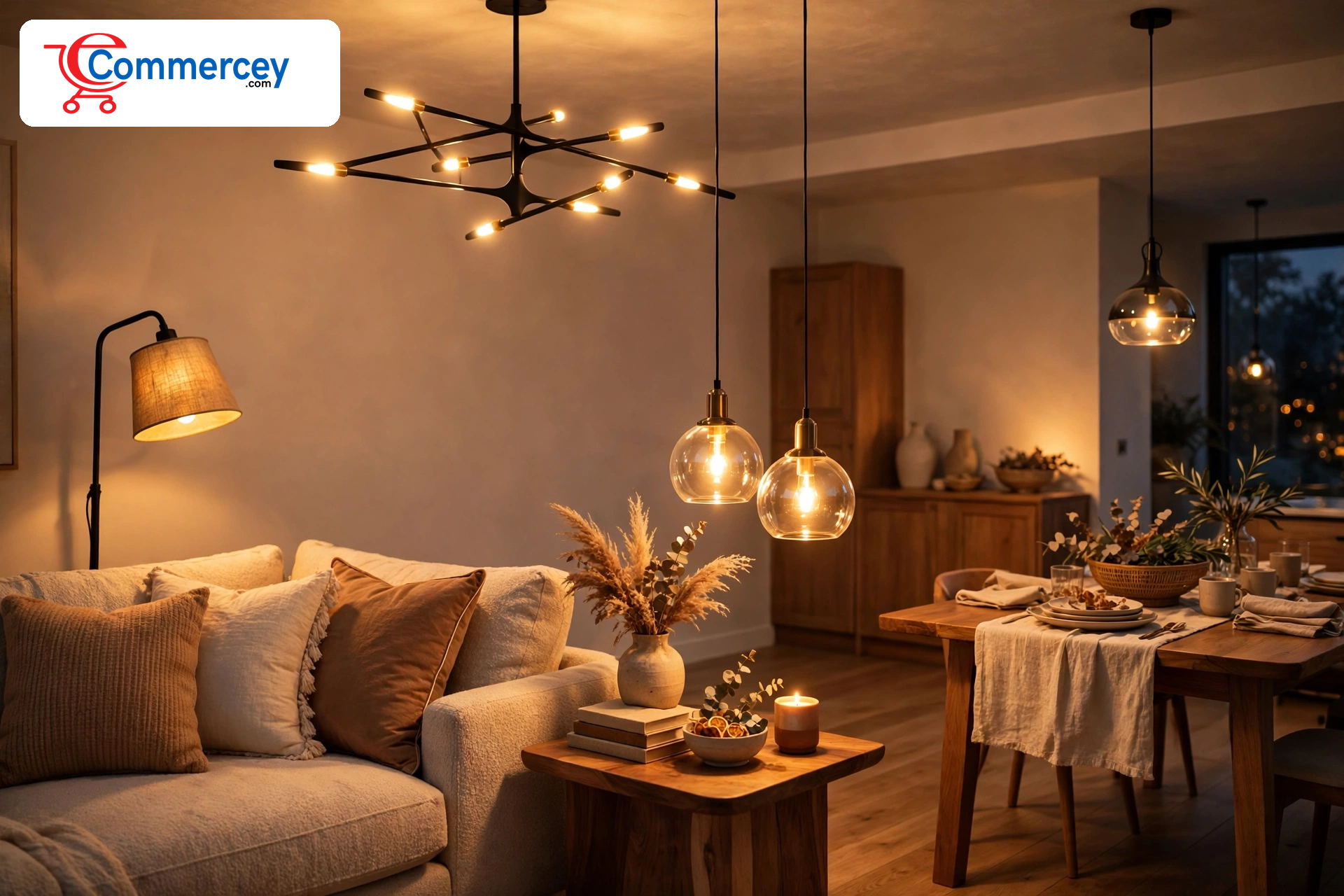
Home Lighting Guide: Chandeliers, Pendants and Lamps That Change How a Room Feels
Walk into two rooms with the same furniture, the same paint and the same rug, and they can feel completely different. The difference is almost always the light. A warm glow over a dining table makes dinner feel like an occasion, while a single bare bulb in the middle of a ceiling makes the same room feel like a waiting room. This home lighting guide will help you choose fixtures that do more than brighten a space — they set the mood, show off your furniture, and make everyday rooms feel finished.
You do not need an electrician’s vocabulary or a designer’s budget to get lighting right. You need to understand three simple layers, know which fixture belongs where, and avoid a handful of common mistakes.
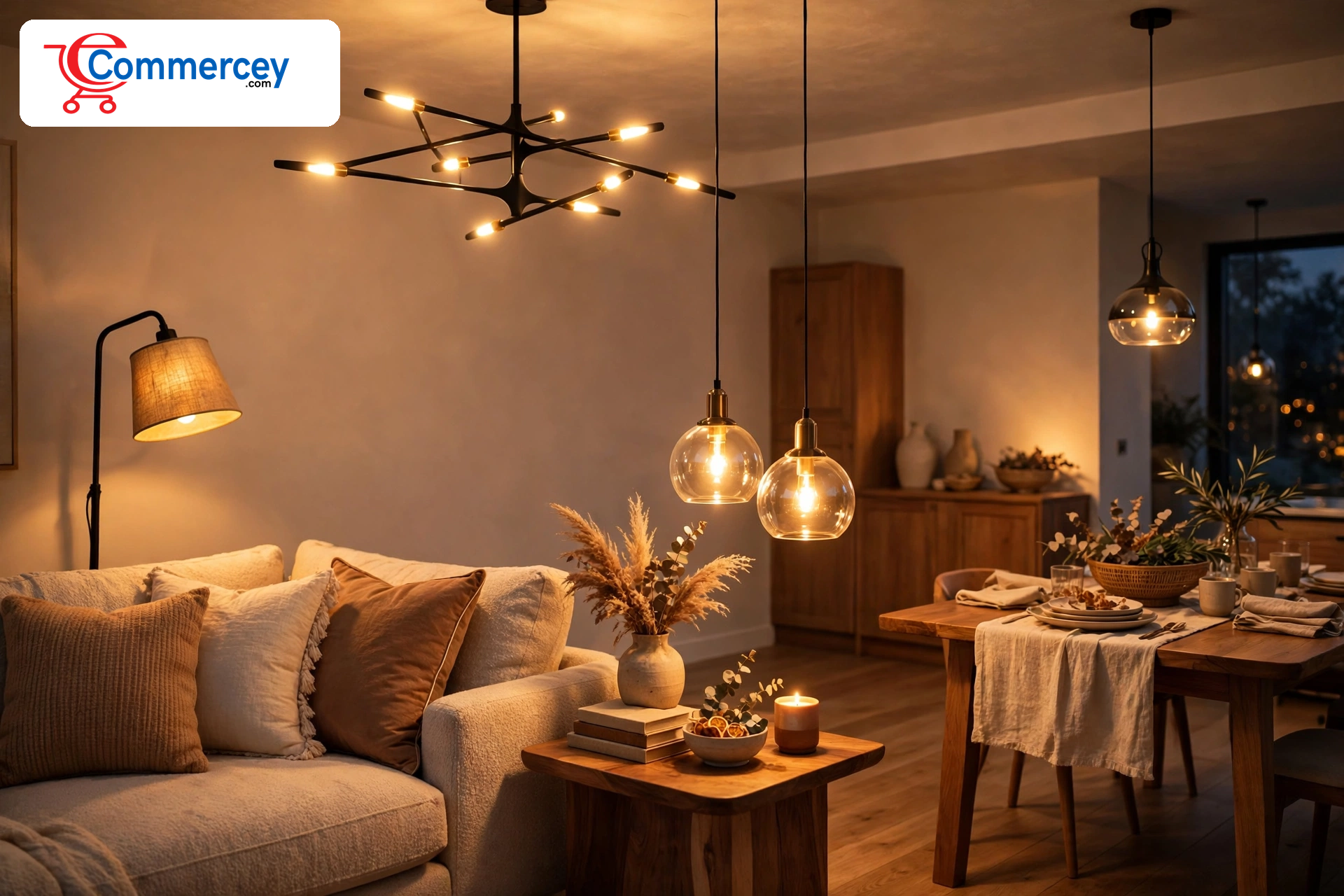
Why Lighting Is the Fastest Room Makeover
Paint takes a weekend and new furniture takes a delivery slot and a budget. Lighting takes an afternoon. Light shapes how we see colour, how big a room feels, and how relaxed we feel in it. A dim, cool-toned room feels flat and tired; the same room with warm, layered light feels welcoming and calm. Lighting also does practical work: good light over a kitchen counter keeps cooking safe, and a reading lamp saves your eyes.
A Home Lighting Guide to the Three Layers Every Room Needs
Designers talk about layered lighting, and the idea is simple: one light source is never enough. A room needs three layers working together, and each layer has a different job.
Ambient Light: The Base Layer
Ambient light is the general glow that fills a room — usually a ceiling fixture, a chandelier, or recessed lights. It should be even and comfortable, bright enough to move around safely but soft enough not to glare. On its own, it leaves a room looking flat.
Task Light: Light Where You Work
Task lighting is focused light for a specific activity: a pendant over the kitchen island, a lamp beside your reading chair, a light over the bathroom mirror. It should be brighter than the ambient layer and aimed exactly where you need it — otherwise you end up squinting over a book or chopping vegetables in your own shadow.
Accent Light: The Finishing Touch
Accent lighting highlights what you love — a picture light over artwork, a small lamp on a sideboard, a wash of light on a textured wall. It adds depth and draws the eye around the room, and it is the layer that makes a room feel designed rather than just furnished. Every room should have at least one fixture from each layer.
Chandeliers: The Statement That Anchors a Room
A chandelier is the most confident fixture in a home. It hangs in the centre of attention and sets the tone for everything beneath it. Modern chandeliers are far from the heavy crystal pieces of the past: today you will find slim metal rings, clusters of glass globes, wooden bead designs and sculptural shapes to suit almost any style.
Size matters more than style. A chandelier that is too small disappears; one that is too large overwhelms the room. Add the length and width of your room in feet and use that number as the diameter in inches — a 12 by 14 foot dining room suits a chandelier around 26 inches wide. Over a dining table, hang it 30 to 36 inches above the tabletop so it lights the meal without blocking anyone’s view.
When you browse the lighting collection, look for chandeliers with dimmers. A dimmable chandelier is really two fixtures in one: bright for family dinners, low and warm for a quiet evening.
Pendant Lights: Small Fixtures, Big Personality
Pendants are single lights that hang from a cord or rod, and they are the most versatile fixtures you can buy. One over a reading nook creates a cosy corner; a row of two or three over a kitchen island turns a worktop into the heart of the home.
When hanging pendants in a row, space them evenly and keep the bottom of the shade 30 to 36 inches above the surface below. Too high and the light scatters; too low and you will bump your head. Odd numbers usually look better than even ones — three pendants over a long island feels balanced.
Table and Floor Lamps: The Flexible Finishers
Lamps are the easiest lighting to buy and the easiest to move. A table lamp on a console softens a hallway; a floor lamp beside an armchair turns an empty corner into a reading spot. Because they sit at eye level, lamps add warmth exactly where people gather.
When choosing a table lamp, match its scale to the furniture beneath it: a lamp should be roughly one-third the height of the table it sits on, with a shade wide enough to hide the bulb from a seated eye line. For floor lamps, look for a stable base if you have children or pets. Lamps also connect lighting with the rest of your decor — a lamp base in wood, ceramic or metal can echo the materials in your home decor, and suddenly the room looks considered rather than assembled.
Choosing the Right Light for Each Room
Every room asks something different from its lighting. Here is a quick room-by-room guide.
Living Room: Layer for Comfort
The living room needs the most layers, because it does the most jobs — conversation, reading, television, entertaining. Start with a ceiling fixture or chandelier, add a floor lamp by the main seat, and finish with a table lamp or two, all on a dimmer so the room can shift from bright family time to a soft movie night.
Bedroom: Keep It Soft and Low
Bedrooms should feel calm, so keep the light warm and low. Bedside lamps beat a single overhead light: they let one person read while the other sleeps. Choose bulbs around 2700K for a warm, restful glow.
Kitchen and Dining: Bright Where It Counts
Kitchens need the brightest task lighting in the house: pendants over an island, under-cabinet strips over worktops, and a strong ceiling light over the hob. In the dining area, a chandelier or pendant hung low over the table creates a pool of warm light that makes meals feel special — the spot where your furniture and your lighting work together to set the scene.
Hallways and Bathrooms: Don’t Forget the Small Spaces
Hallways and bathrooms are the most overlooked rooms for lighting. A small pendant or a pair of wall lights stops a hallway feeling like a tunnel, and lights on either side of a bathroom mirror — rather than one above it — give even, shadow-free light.
Home Lighting Guide: Bulbs, Colour Temperature and Dimmers
The fixture gets the attention, but the bulb does the work. Colour temperature, measured in Kelvin, decides whether light feels warm or cold: around 2700K is warm and cosy, 3000K is a soft white for living areas, and 4000K is a cool, bright white for kitchens and workspaces. Living and sleeping spaces want warm light; working spaces want cooler light.
Always choose LED bulbs. They use a fraction of the energy of old incandescent bulbs, last for years, and now come in every colour temperature and dimmable option. Check the lumen rating, not the wattage — 800 lumens is roughly the old 60-watt bulb, and 1,100 lumens is roughly 75 watts. And fit dimmers wherever you can: a dimmer is the cheapest upgrade in lighting, letting one fixture serve a bright morning and a quiet evening.
Common Lighting Mistakes to Avoid
Even good fixtures fail when a few basic rules are ignored. Watch out for these five mistakes:
- One light per room. A single ceiling light leaves corners dark. Add at least one lamp or a second layer.
- Fixtures hung too high. A chandelier hung near the ceiling lights the ceiling, not the room. Bring it down to where people actually live.
- Bulbs too bright or too cool. A 5000K daylight bulb in a bedroom feels like an office. Match the temperature to the room.
- Ignoring scale. A tiny pendant over a large table looks lost; a huge chandelier in a small bedroom feels crowded. Measure first, buy second.
- Forgetting the dimmer. Without one, every light is either on or off — with one, every light adapts to the moment.
Lighting is the one home purchase that changes how every other purchase looks. The sofa you already own looks better under warm, layered light, the artwork on the wall finally gets noticed, and the dining table becomes the place everyone gathers. Start with one room, add the three layers, and see the difference.
Related Resources
- Lighting — Chandeliers, pendants, lamps and fixtures for every room.
- Home Decor — Decor pieces, rugs, artwork and accents to finish any room.
- Furniture — Furniture for every room: seating, tables, storage, beds and more.